Blog Feed

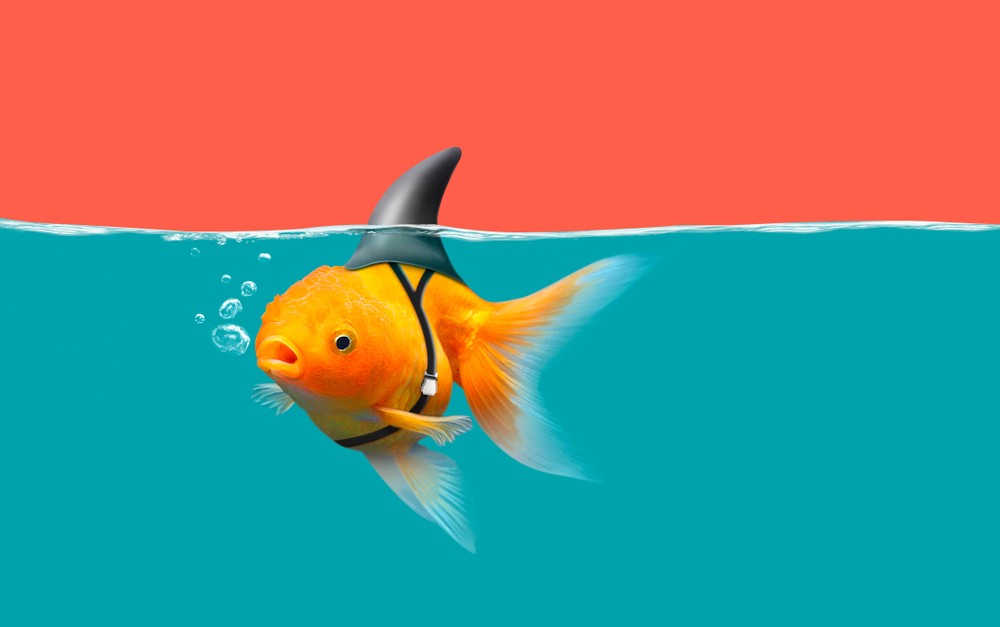
Fake it till you make it. Deceit or a feat?

Fake it till you make it… As a recent University graduate or someone underqualified for a job, is faking your skills really acceptable?

This controversial phrase can be perceived by others as an ego driven mentality, lying your way to success. Though the common term can be seemingly inauthentic, there are many good and bad ways to take it and times where we should and shouldn’t apply this to our lives.

When not to use it

Job interviews

When going into a job interview, you really need to sell yourself. Clearly articulating your knowledge, experience and what you can bring to the company. Now, in a competitive field, you may not feel confident in certain aspects of the role. What do you do in this case? Lie through your teeth? Telling the employer, you fit the job requirements like you were the missing puzzle piece they have been pining for? Or do you come clean, completely honest, explaining you know nothing about over half of the points the employer has listed on the job description? Neither, the term “fake it till you make it” has some grey area when it comes to job interviews. Deception will eventually come and bite you in the back when you are expected to perform the job’s functions you claimed to be experienced in. Honesty is always appreciated but talking yourself down due to lack of experience will cause the employer to undermine your abilities and potential to grow.

It is important to display sincerity in a job interview. You may not be the most experienced but showing you are passionate about the job and are willing to learn where your gaps in knowledge are will get you a very long way. Employers are usually looking for individuals with soft skills, being able to learn on the job as times change is an essential part of growth for a business. Explaining what you do know or how other aspects of your life apply to the job skills will get you much further than saying you know nothing. I personally have had someone tell me how in a job interview for a financial analyst position, he told the employer how he was able to make money off a game called Maple story as a ten-year-old which had helped him understand various markets from a young age. He got the job. Employers would rather hear a story like that over an answer such as ‘I know nothing’.

When to use it

Being your best self

Faking it may not always be deceiving. Sometimes, faking it can bring out who you really want to be. You start new job, it’s your first day, you’re super nervous that you don’t have friends and are too afraid of approaching others in the company. Despite feeling like this it is necessary that you do fit in with the company’s culture. What should you do? Fake it! Fake the confidence that you didn’t think you had. In this case, you are only bringing out in you what you wanted to see in yourself.

Being a better you may not always come to you naturally, but faking it till you make it to that level of confidence in this case will aide you in becoming the kind of person you want. Faking confidence moderately will allow people to respect you more and as well as influence others. Having open body language will make you seem more trustworthy than if you were hunched over, slinking around the office like you had a million secrets to hide. Though you may not always feel this way, fake confidence is the first step to real confidence.

Final words

Deception is bad. Telling blatant lies regarding your skillsets will eventually lead to your own detriment. In these cases, honesty is the best policy and showing other aspects of your life can be applied to job roles which can be very beneficial. Faking it till you make it should only be used in the sense of becoming who you want to be, bringing out the best in yourself.
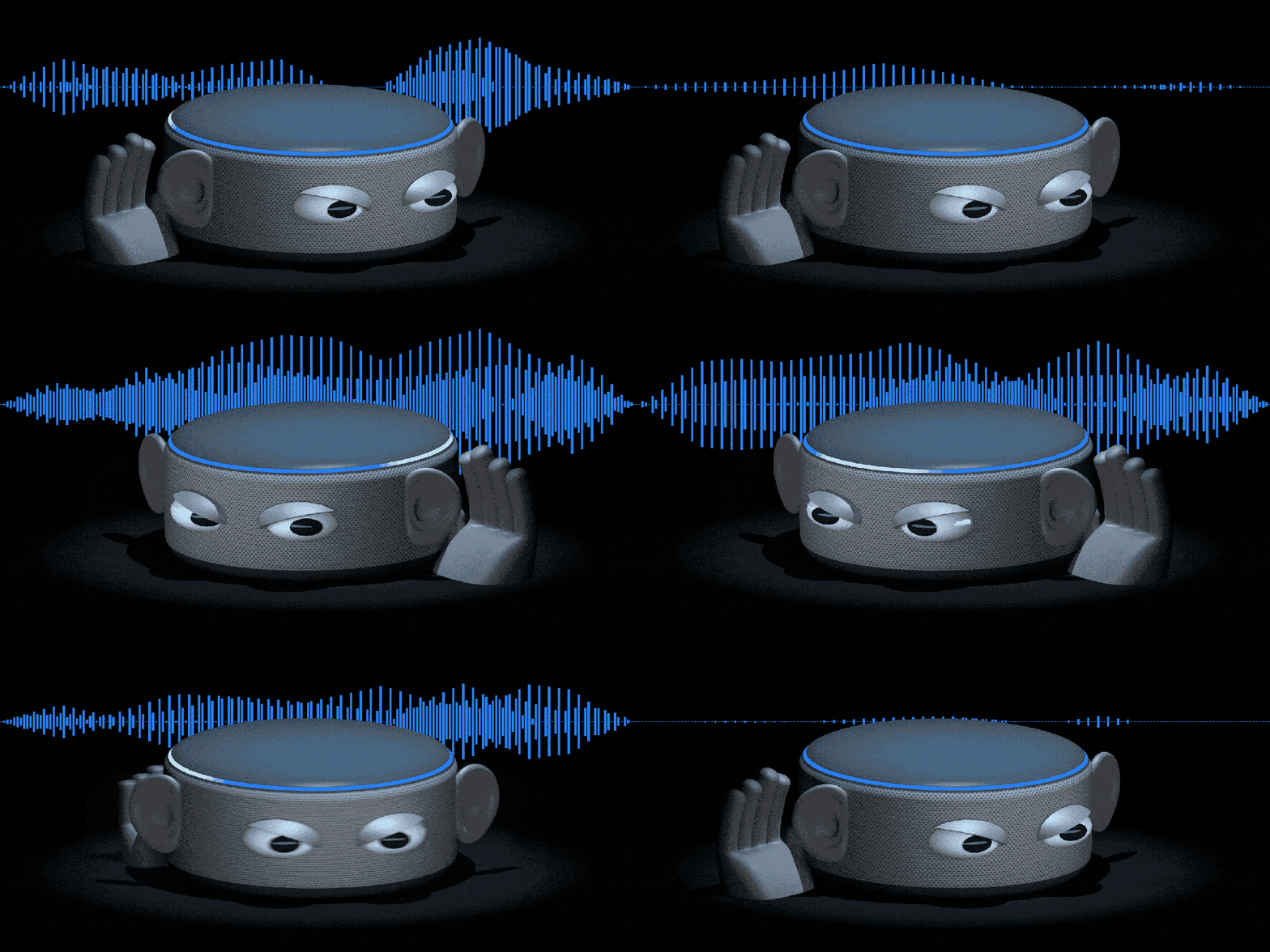
Alexa, stop eavesdropping on me!

In today’s society, having a virtual assistant such as Alexa by Amazon and Google Home by Google is a common commodity. Whether it be turning on some music or switching off the lights, Alexa is there to help with just a simple command. But what kind of security issues could that cause for our privacy? Who is to say that our every word is not being recorded, tracked and sold off?

Amazon employees have admitted that Alexa users are being recorded, though this is not publicly mentioned. Why is this so important? As it is a breach of our privacy, we will be untold and unaware of where our information, data and recordings will end up and in who’s hands. A spokesperson has mentioned that users are able to turn off this setting and it is only on by default for improving the AI with a multitude of voice recordings.

In saying this, many people are initially unaware of this voice tracking and recording practice prior to purchasing. This leaves them vulnerable to having their privacy exploited and/ or exposed. One such example, for the better, is when amazon was forced to hand over Alexa recordings as evidence in court regarding a murder trial. Aside from this case, there have been numerous attempts from the US government to obtain voice recordings from the virtual assistant devices.

What does this mean for us as a society? The issue of privacy violation nowadays is extremely hard to avoid. Whether it be signing up for an email subscription or logging into a website using our Facebook profile. It is important to take precautions of what information we give away and to whom. Reading the fine print may become more and more necessary as many of these privacy issues which we do not agree with are hidden away.

How do you feel towards Alexa’s privacy breach? Would you purchase one if you don’t currently have one?

ASOS using memes to create more customer value

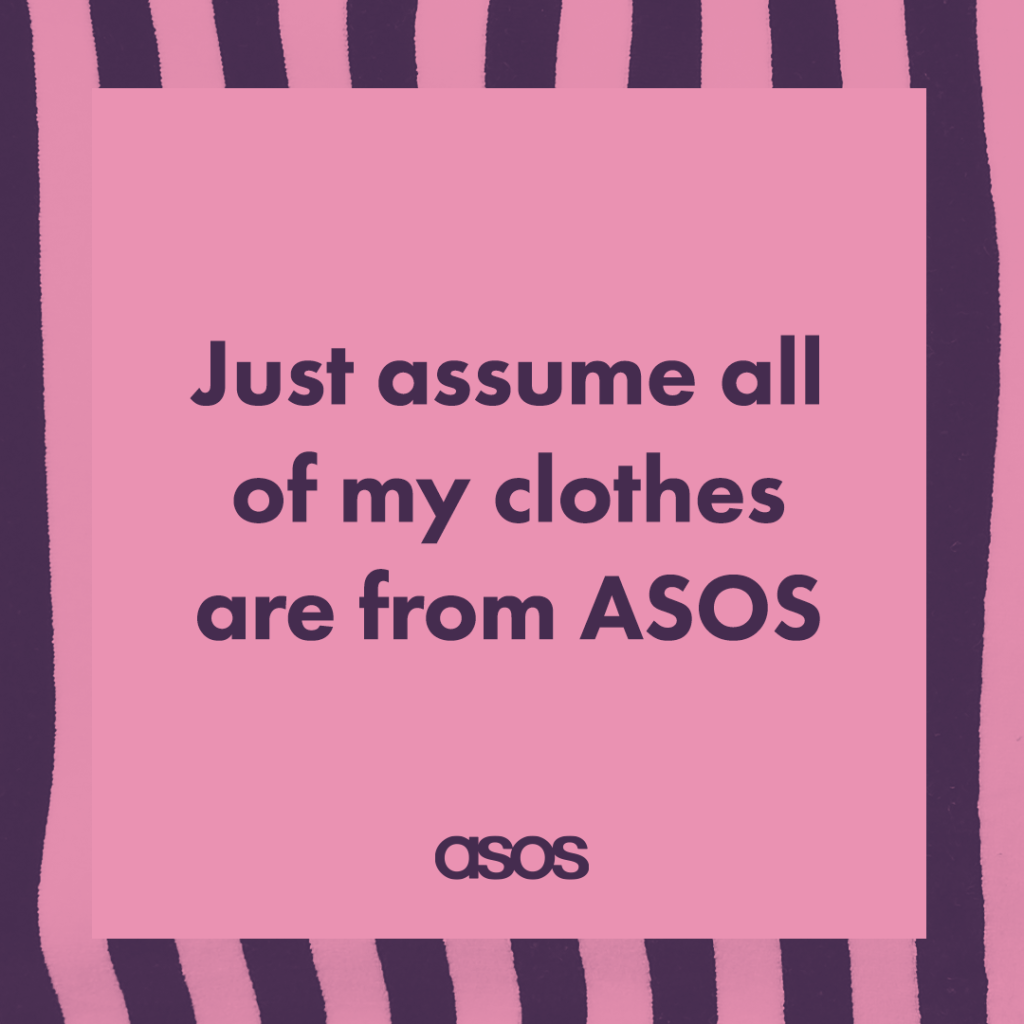
Being among the most well known e-commerce fashion companies, ASOS has grounded itself as an industry leader in online retail and fashion; having the trendiest pieces and a trustworthy name. With the rise of competitors in the e-commerce platform such as PrettyLittleThing, The Iconic and BooHoo, there was a need for the company to step up its game and increase brand loyalty.

With the main demographic being men and women aged 18-34, it is no doubt using social media to garner attention was the right decision. Targeting the millennial audience through the use of social media and ‘memes’ reinforced the company’s youthful and refreshing brand image.

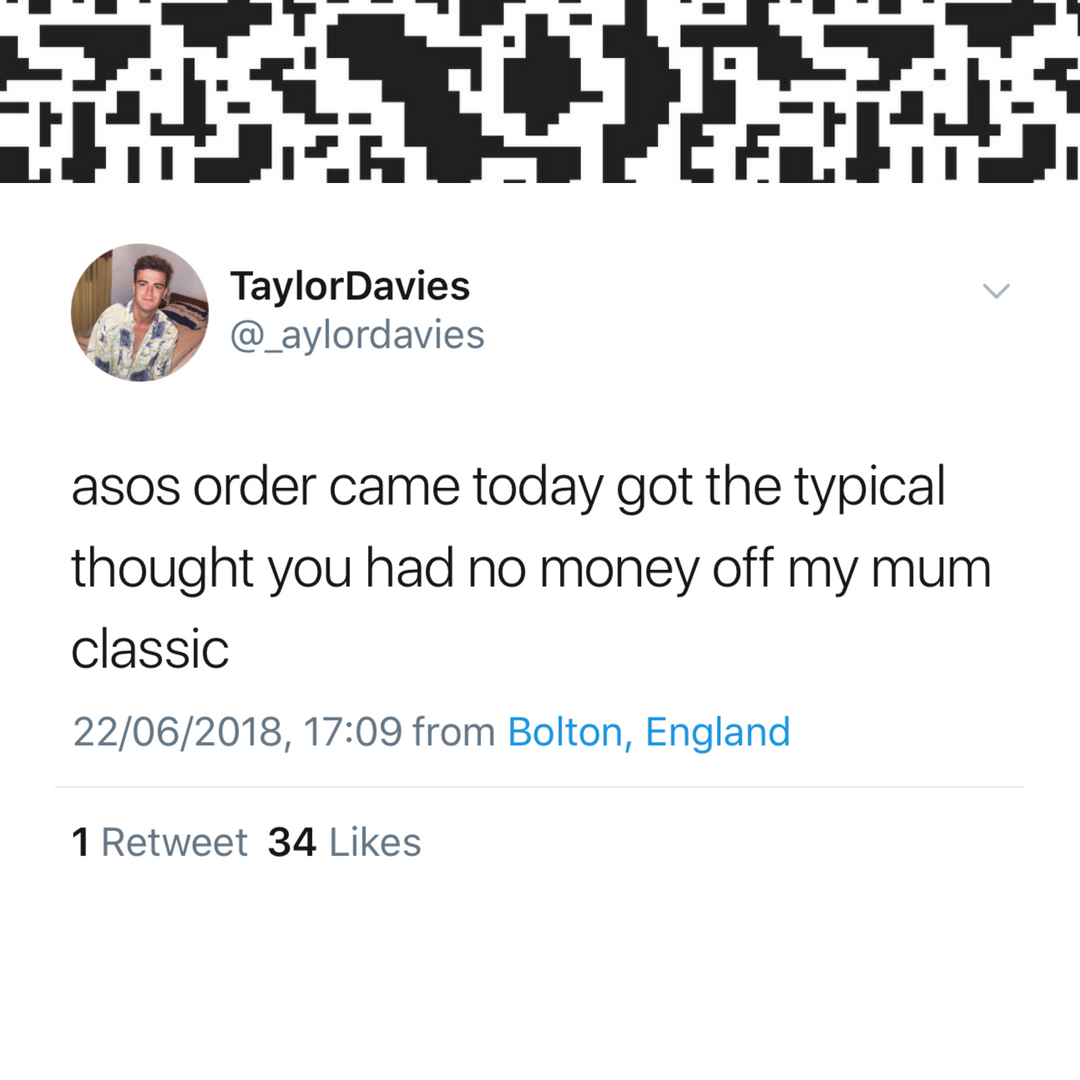
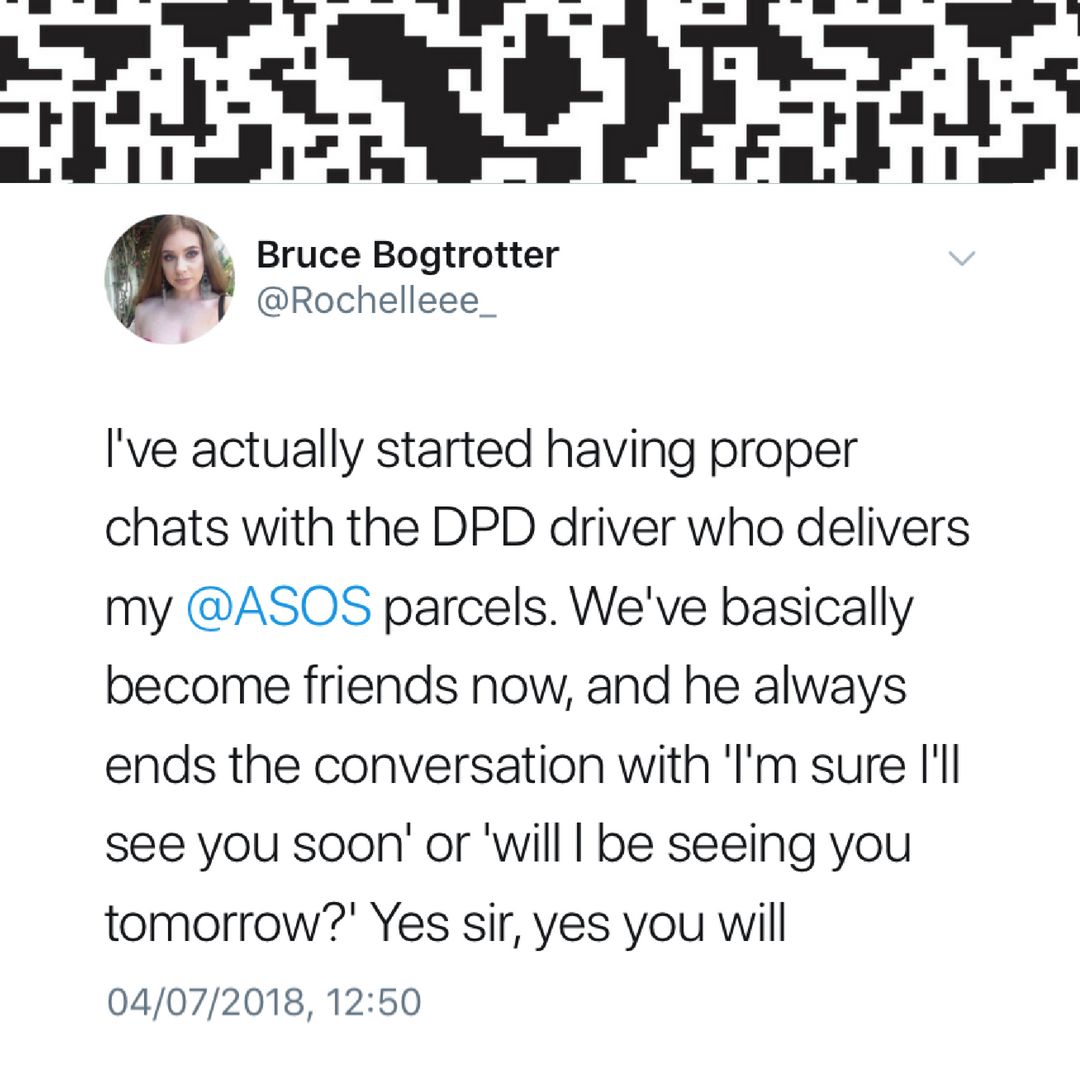
Re-posting other fans showing brand loyalty will not only increase the trustworthiness of the brand, but also allows consumers to contribute towards brand value co-creation.

Though still in use and should not be ruled out, traditional forms of media marketing such as magazines, newspapers and radio have begun to phase out. Consumers are spending more and more time on social media with an increase of 62.5% average time spent daily on various social media platforms.

With an annual revenue of approximately 1.3 billion dollars, this powerhouse company has increased it’s revenue by 13% since the previous year due to pushing a stronger focus on their marketing strategies and expanding their shipping location to more geographical locations.

Though what we may see on a surface level may just be memes, jokes and silly pictures, a well thought out marketing plan has been running in the background. We see these pictures, we laugh and we relate. That is exactly what the company wanted. The brand then becomes more memorable and in turn, more trustworthy.

Are restaurant reviews trustworthy or trash-worthy?

You go to a restaurant. Your server is on the ball, greeting you as soon as you enter. As you are seated at the special booth seat, you are immediately offered the complimentary bread and butter, met with a smile and told to take your time deciding. Your food arrives promptly and tastes as amazing as it looks. After such an unforgettable experience, of course you would leave a special online review and tell all of your friends about it right?

But what if your experience was the complete opposite? Being ignored by rude staff, dirty uncleaned tables everywhere and sub par food that you have payed WAY more than what it was worth. You would do the same thing right? Leave a BAD review and tell your friends to never come again.

We as human beings, are emotional creatures. When a mediocre event occurs we tend to just forget about it. But when something that amazes us or disgusts us happens, it sticks in our memories and we generally have a need to share these unique experiences with those around us. A common practice after experiencing something emotionally triggering (good or bad), is to share it with others. When it comes to the hospitality industry, this could also mean on public reviewing forums such as Google Reviews, Trip Adviser or Zomato.

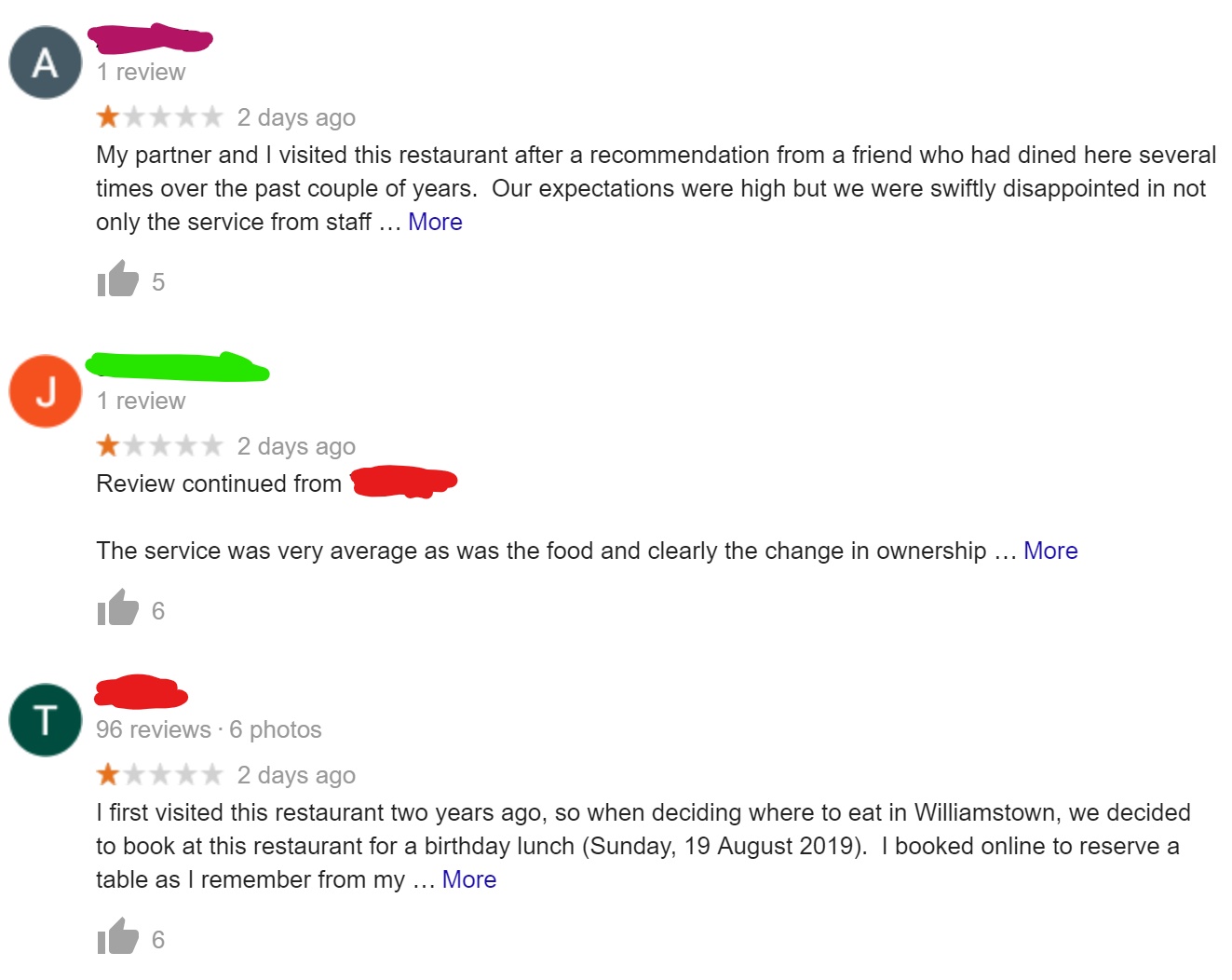
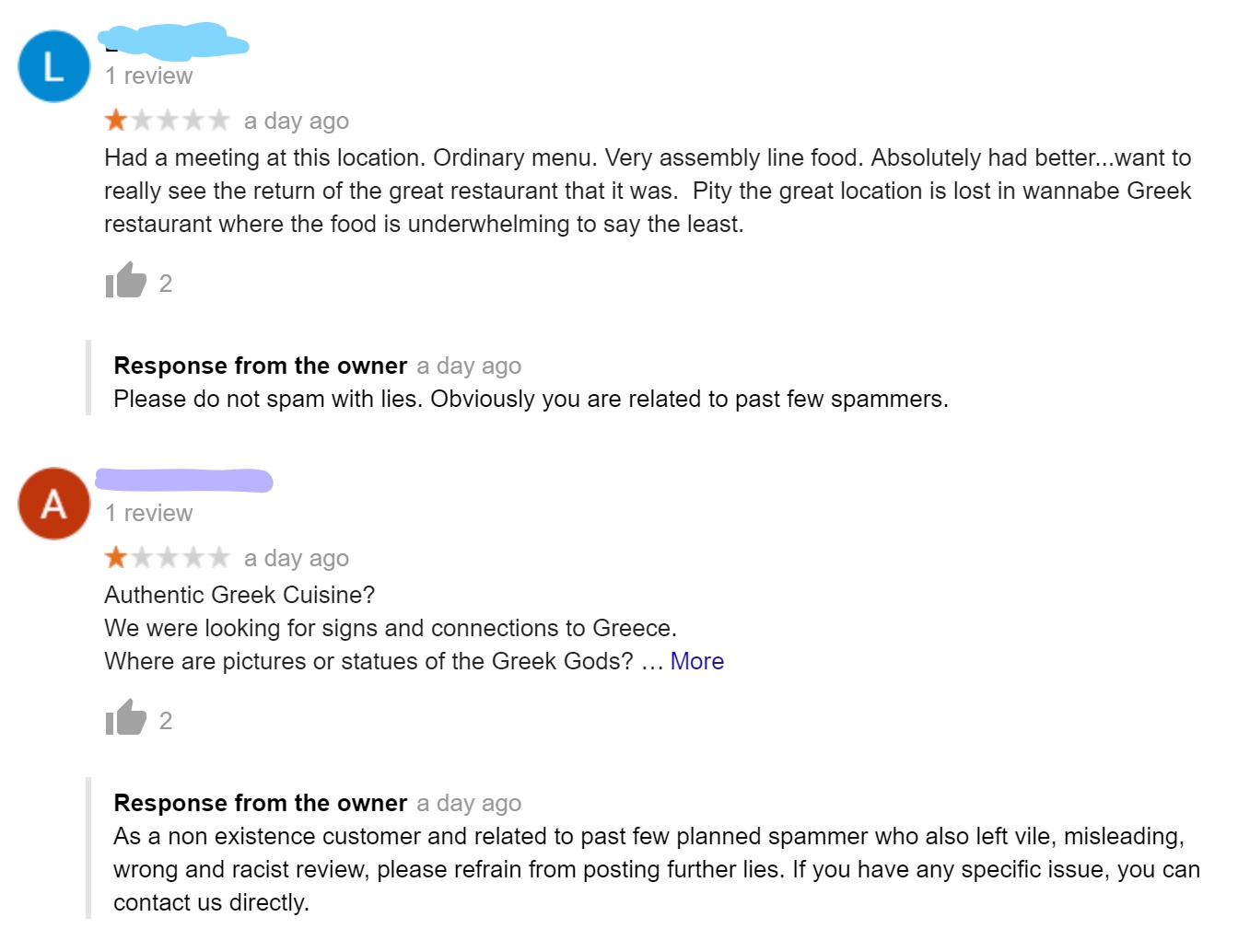
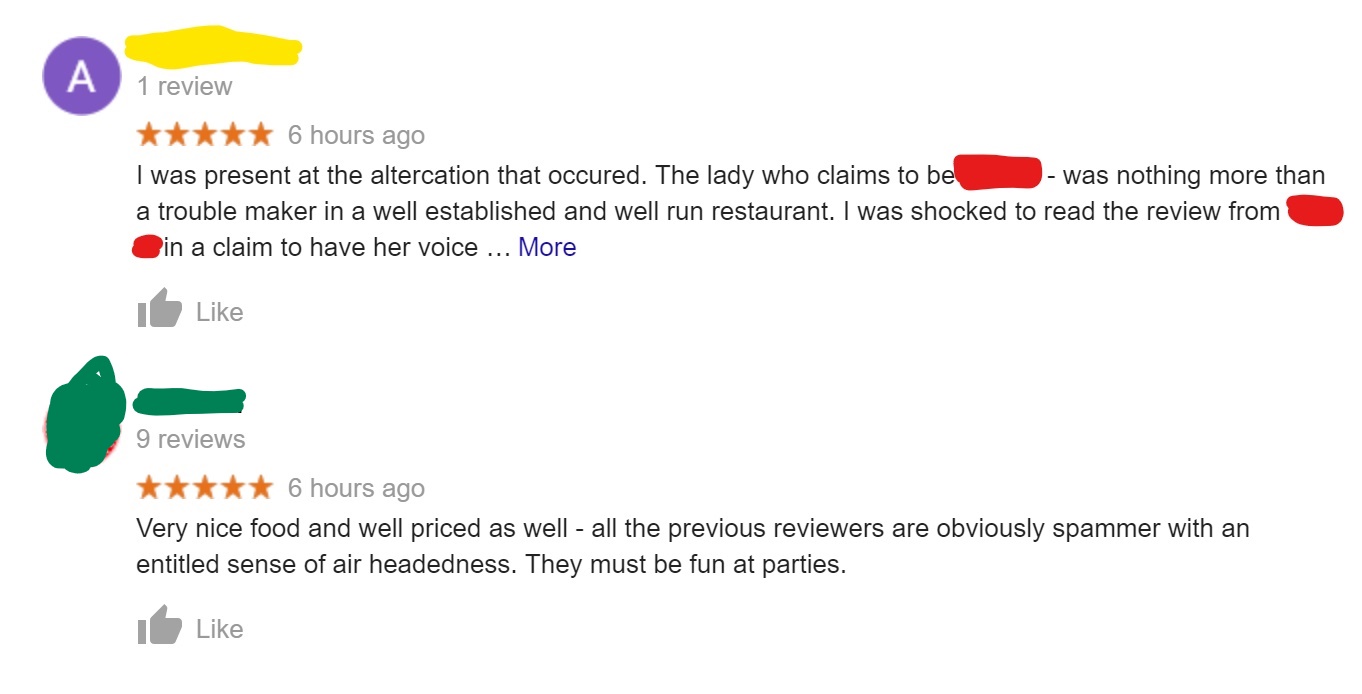
The issue with seeing online reviews is the level of truth may not always be verifiable. Though many companies implement strict regulations for ‘trolls’ and spammers, people still slip through the crack and can tarnish a business. There have been many cases of individuals being unhappy with their experience, telling their friends through word of mouth, then bombarding businesses with fake reviews for the general public to see. See figure 1 & 2

In some cases where witnesses were there or others who passionately care for the business become aware of this level of blasphemy towards a beloved place, the general public may step in (see figure 3). Not all businesses are this lucky and before forum moderators are able to persecute the perpetrators and trouble makers, the damage may have already been done. What do you guys think? do you trust every review you see online?

Instagram removing ‘likes’, what does this mean for us?

Whether it be looking for a place to eat, a country to travel to, baking or fashion inspiration, Instagram has been the number one stop for many individuals. Being an image based platform used to share images of ones life, business, interests and hobbies, Instagram has grounded itself as one of the most used social media platforms on the planet.

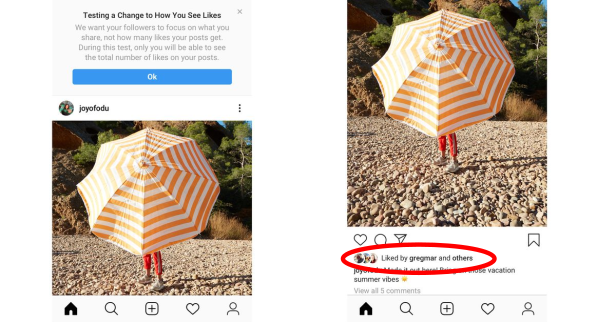
Many users on the platform would formerly determine the popularity of an image/post based on the amount of ‘likes’ the image had garnered. But with this amount of ‘likes’ determining ones popularity, also came the insecurity of one posting by some. As of 2019 the platform made the executive decision to remove visible ‘likes’ in order to boost the self esteem of users of the platform; not having to worry or care about how others will see them based on the amount of ‘likes’ they can get on a post.

Users are now unable to see the number of likes on others posts

This massive change has been met with mixed responses with some people going on a twitter rant saying this change was for the ‘snowflakes’ and that it will jeopardise the livelihood of many full time influencer’s.

At first glance, PR representatives may not be able to see the level of engagement of an influencer’s post. However, there are still methods to see a persons level of engagement based on the saves and screenshots of the users posts and stories. One extra step will have to be provided by simply having the influencer providing screen shots of their statistics.

On the flip side, many other users have stated that they feel more encouraged to post as they won’t need to feel compared or insecure about judgement from others. Having a platform where one can share their content without the pressure of thinking ‘am I popular enough?’ or ‘why am I only getting X amount of likes this time?’.

What do you guys think? Has taking away like on Instagram been a positive or negative experience for you?